Grade 7
-
Language
-
Reading: Informational
-
Reading: Literature
-
Speaking & Listening
-
Writing
CCSS ELA Standard: 7.L.3.a
Choose language that expresses ideas precisely and concisely, recognizing and eliminating wordiness and redundancy.*
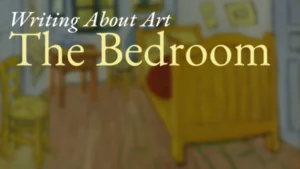
Writing About Art: The Bedroom
Van Gogh loved his little bedroom so much that he painted it three times. How many details will your students notice, and what poem will they write about it?
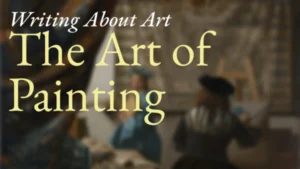
Writing About Art: The Art of Painting
A curtain pulls back, and we’re suddenly inside a painter’s studio. Vermeer hid dozens of details in this room. How many will your students find, and what poem will they write about it?
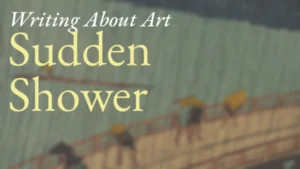
Writing About Art: Sudden Shower
Rain pours down on a bridge, and everyone runs for cover. What would your students hear, smell and feel in Hiroshige’s famous storm? They’ll turn it into a poem built one line at a time.

That Quote’s Not Quite Right: Albert Einstein
When I see a quote, I often think, “That’s not quite right!”
Improving Shakespeare’s Repetition
Let’s help William Shakespeare with his use of repetition.

Advanced Alliteration and Consonance
When students learn about alliteration, it’s hard to steer them away from goofy tongue-twisters. Certainly, there must be more powerful and practical ways of using alliteration. In this lesson, I draw on delicious examples from Shakespeare to show how a very advanced writer used alliteration. Then, I break those ideas down so students can try them out.
Writing Sample: Moby Dick
A passage from Moby Dick to use as a mentor text, discussion starter, or writing prompt.
Passive to Active Voice
In this lesson, students will not just fix passive sentences, but break active sentences as they learn to put the star of the sentence first.