Grade 4
-
Communication & Collaboration
-
Reading: Comprehension
-
Reading: Foundations
-
Writing
Indiana ELA Standard: 4.W.6
Demonstrate command of English grammar and usage, focusing on:
Writing About Art: The Art of Painting
A curtain pulls back, and we’re suddenly inside a painter’s studio. Vermeer hid dozens of details in this room. How many will your students find, and what poem will they write about it?
Writing About Art: Sudden Shower
Rain pours down on a bridge, and everyone runs for cover. What would your students hear, smell and feel in Hiroshige’s famous storm? They’ll turn it into a poem built one line at a time.
Writing Compound Sentences
Students work with subjects, predicates, and conjunctions to write compound sentences.
Parts of Speech Party – Gift
How many different ways can we use the word “gift” in a single paragraph? Let’s find out in this Parts of Speech Party!
Parts of Speech Party – Care
How many different ways can we use the word “care”? Let’s find out in this Parts of Speech Party!
Parts of Speech Party – Fruit
How many different ways can we use the word “fruit”? Let’s find out in this Parts of Speech Party!
Parts of Speech Party – Change
How many different ways can we use the word “change”? Let’s find out in this Parts of Speech Party!
Parts of Speech Party: Introduction (Check)
How many ways can we use “check” in a paragraph? And can your students spot when it’s a verb, or a noun, or an adjective?
Fixing Shakespearean Run-Ons
Can your students help The Bard? We’ll fix five Shakespearean run-ons in three different ways.
Writing Technique: 3 Dependent Clauses
A specific technique to help students add some spice to their writing. We’ll be writing sentences with three dependent clauses.
Fancier Figurative Language: Advanced Repetition
Is your students’ use of repetition limited to, “The girl was very, very, very fast.”? Let’s borrow some ideas from Shakespeare!
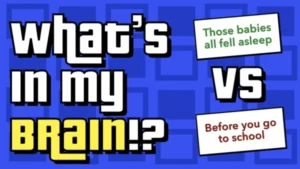
What’s In My Brain – Independent vs Dependent
These clauses are sorted into two groups. What’s the rule? No definitions given — just examples.
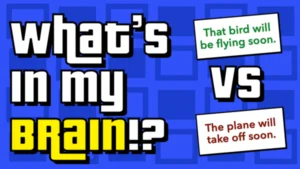
What’s In My Brain: Progressive vs Simple Tenses
Will your students notice progressive tense vs simple tense?
Parts of Speech Party – Well
How many different ways can we use the word “well”? Let’s find out in this Parts of Speech Party!
Parts of Speech Party – Thanks
How many different ways can we use the word “thanks”? Let’s find out in this Parts of Speech Party!
Parts of Speech Party – Limit
How many different ways can we use the word “limit”? Let’s find out in this Parts of Speech Party!
Passive to Active Voice
In this lesson, students will not just fix passive sentences, but break active sentences as they learn to put the star of the sentence first.
“Its Big Day” – A Children’s Story About Its and It’s
Let’s spice up a typically dull lesson about the difference between “its” and “it’s” by asking students to write a children’s story about the adventures of a critter named It.
Ways to Start a Sentence – Part 3
Your students’ sentences all start the same way. Here are three techniques that fix that overnight.