Introducing Ourselves With Depth and Complexity and Frames A go-to activity to introduce the prompts of depth and complexity to students while they also introduce themselves to their new classmates.
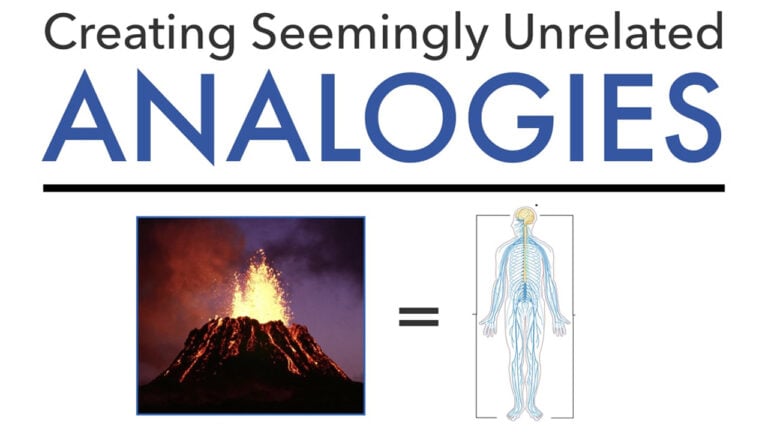
Creating Seemingly Unrelated Analogies Want to encourage students to find unexpected connections across content? Here's a quick framework based on the most important terms from both bits of content.
Help my students remember these confusing terms! If you want students to memorize, you can't aim for memorize. You have to aim higher – and then memorization comes along for free.
Four Types of Questions You Can Ask Asking questions is such a basic tool of teaching, yet how many of us have ever been taught to ask good questions? In this opening to a series about questioning, we'll explore how to get students asking each other questions.
Group Investigation: Lessons Built on Curiosity John Dewey's Group Investigation is a favorite model of instruction of mine. It's simply built on curiosity!
A Tessellation Art (and Math) Project Let's create an MC Escher-style tessellation art (and math) project with nothing more than an index card, a marker, and paper.
“Engagement” isn’t BAD, but… "Engagement" is a nice by-product of a well-designed lesson, but it sure isn't our actual goal as educators.
Lunar Survival Skills We're supposed to rank fifteen items according to usefulness if we were stranded on the light-side of the moon. The items range from pistols to powdered milk. Some seem useful, but are actually worthless while others seem unnecessary on earth, but are actually vital when stuck on the moon. However, the structure of the activity as a website is not optimal. Let's improve this and make it an awesome problem–solving exercise for our class.
Combining Depth and Complexity Prompts into a Generalization Let's start with a puzzlement, ask kids to generate an abstract statement, and then find evidence that their statement works across several different areas.
Concept Formation: A Model for Inductive Thinking Here's are the steps for running an inductive lesson based on Hilda Taba's model of Concept Formation. Plus a sample lesson about the Nile River.