At Byrdseed.TV: How FEW colors do you need to fill in this map?
Byrdseed Logo
Byrdseed.TV Example Lessons Depth & Complexity
❮ Back to: All Differentiation Techniques

Differentiation TechniqueGet Ridiculous

Read The Overview: Get Ridiculous!

One technique for finding complexity in a topic is to look for the edge cases, the outliers, the really big or small versions.

Specific Examples of “Get Ridiculous”

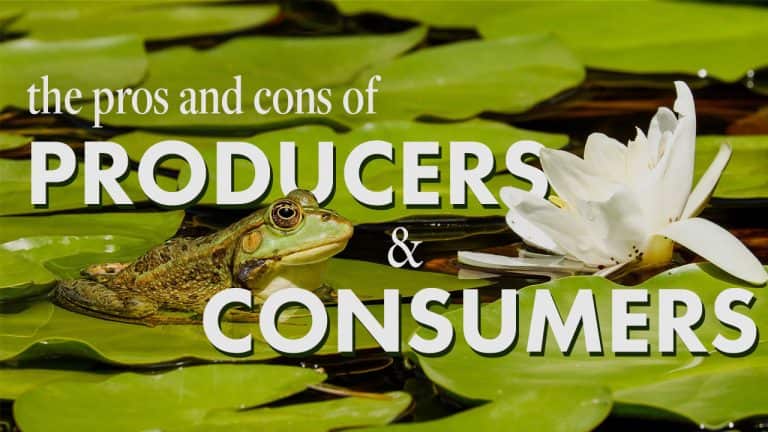
Thinking Like Producers About Consumers

Thinking Like Producers About Consumers

Here's how I'd use ethics and multiple perspectives to get students thinking about producers, consumers, and decomposers in new and interesting ways.
Math Project: Disneyland Parking Structure

Math Project: Disneyland Parking Structure

Let's develop a math project to challenge students who have demonstrated a mastery of multiplication and are ready to explore its applications. We'll count the parking spaces in the Disneyland parking structure!
Just How Much Pasta Could I Cook…

Just How Much Pasta Could I Cook…

So, just how much pasta could I cook in an Olympic-sized pool?
Fill ‘er up with Clam Chowder!

Fill ‘er up with Clam Chowder!

Sure gasoline seems expensive. Until you try to fill your car up with other liquids!
Writing in Pi-lish

Writing in Pi-lish

Here's the perfect constraint for March! Writing with the digits of Pi.
Going Beyond “Challenge Words” In Spelling

Going Beyond “Challenge Words” In Spelling

Many students blow past grade-level spelling and vocabulary at a young age. Unfortunately, a common technique to "challenge" them is to find harder and more obscure words for their spelling list. Instead, let's take advantage of the built-in complexity of common words with multiple-meanings.
Getting Ridiculous with Parts of Speech

Getting Ridiculous with Parts of Speech

Here's how you can add some spice to an otherwise dull study of parts of speech.
Calculating the Volume of Laptops

Calculating the Volume of Laptops

So once your students can calculate volume… what do you have them do next? In this math project, kids will look up historic laptops, calculate their volumes, and note how technology has changed over time.
Thinking Like Equivalent Fractions

Thinking Like Equivalent Fractions

Go across disciplines by asking students to write a story about fraction equivalence.
Could we fit 1,000 kids on the playground? 10,000?

Could we fit 1,000 kids on the playground? 10,000?

If your students can find the area of a square then, armed with Google Earth, they can also figure out how many students you could pack into your school's playground.
Next Page »

Want to share something?
Everything written on Byrdseed.com is licensed as CC-BY-SA unless otherwise noted. What does that mean?

About • Privacy Policy • Disclosure

Copyright © 2009 - 2026 Byrdseed, LLC