“Everything is so linear, but this makes me think diagonally!” ~ a student describing Byrdseed.TV
Place value is something we cover in elementary school. It seems simple, but I’d wager that very few adults really understand the topic. I sure didn’t until I worked with non-base-10 number systems in college. Your students can get a taste of this mind-boggling experience by imagining what it would be like if we didn’t have the number 9. What would each digit represent then?
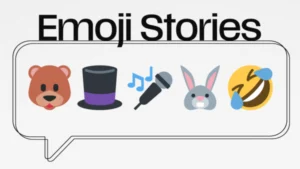
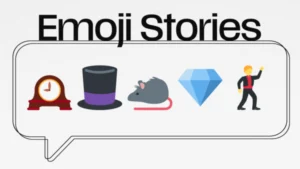
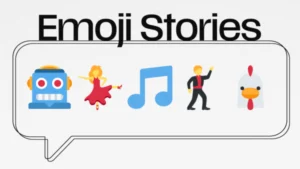
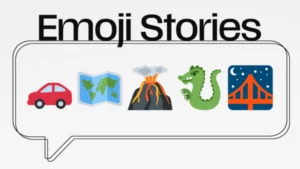
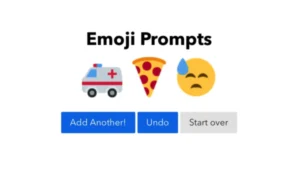
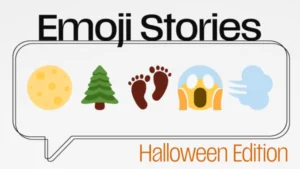
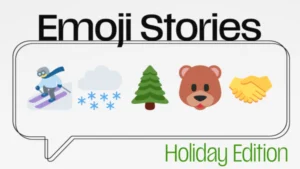
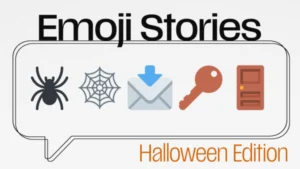
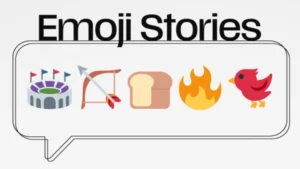
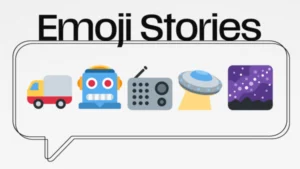
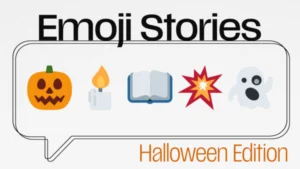
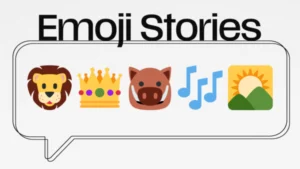
Five emoji. One story. Where will your imagination take you?
We’ll show students how to add more variety to their writing by starting sentences with a reason, a prepositional phrase, and a simile.
Reduce anxiety by breathing in a square pattern.
We tell students to ‘show, not tell’ — but that advice is useless until they experience the difference. This lesson makes it click.
Click up an interesting, visual writing prompt suitable for any grade or purpose.
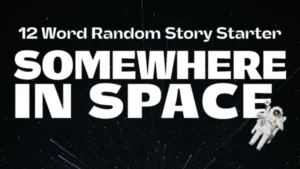
Students use 12 random phrases to create a story that takes place in space!
When a student’s brain is full of worries, everything feels urgent. Brain Plate helps them sort what’s real from what’s noise — and actually do something about it.
A passage from “Dr. Jekyll and Mr. Hyde” to use as a mentor text, discussion starter, or writing prompt.
We’ll start with the cliché “as cold as ice” and go somewhere much more interesting.
Do you know someone who becomes a bit overexcited by ideas?
You only have six digits to form three fractions. Can you combine them to get to 0?
When fractions take on a new denominator, it’s as if they’re wearing a disguise – same value, new look. So let’s write a story about fraction equivalence starring a fraction who needs to fit in with a new group.
A mysterious image. Reveal it slowly. Let your students wonder!
Learn to lead a lesson that is built entirely on student curiosity.
Have you ever noticed that some stories have awfully similar problems? What if we looked for the most unusual way of solving a repeating problem?
Your class will become a wonderland of imaginary creates with Greek and Latin names.
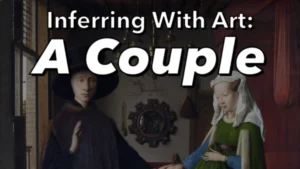
What’s going on in this room? There are shoes everywhere! Are those… oranges? Let’s make some inferences!
Reduce anxiety by learning to “change the channel.”
Your students will set up a tournament to determine which person or character best demonstrated resiliency.
Let’s use factors to encode and decode words.
Adults can limit anxiety by implementing the Five Question Rule.
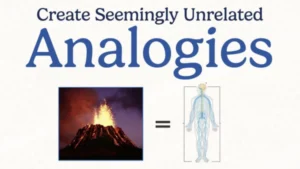
We’ll take two seemingly unrelated pieces of content (say volcanoes and the human body) and then build analogies to connect the two ideas. In the end, students can create a skit, comic, or story relating the two concepts.
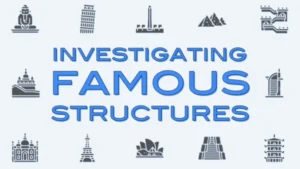
The Eiffel Tower, the Colosseum, the Sydney Opera House — group them, pick the best from each group, then design your own.
How I accidentally discouraged curiosity in my classroom.
Want something to do during the holiday season that is both fun and involves thinking? Get students writing about what a snowman would think about Halloween or what a ghost would think about Thanksgiving.
Just because a task is “creative” doesn’t mean students are at the top of Bloom’s Taxonomy.
How would people with two different perspectives discuss a decision from history?
Can someone do the right thing, but for the wrong reason?
Why are there 12 months? Why don’t weeks fit into months evenly? Why don’t weeks fit into the year evenly? What’s going on with the calendar!