Serving advanced learners (and their teachers) since 2012.
What if we played Tic-Tac-Toe with numbers and instead of three-in-a-row, we add up to 15? Well… then we’d have Number Scrabble!
Four blanks, ten digits, one target. Students hunt for every pair of two-digit numbers that adds to 170 without repeating a digit, then work out why there are only four.
Four sets of 2-digit and 3-digit addition and subtraction practice. But the unknown isn’t where you expect it to be!
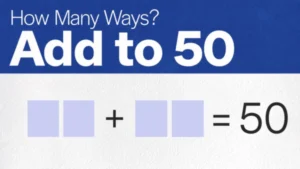
Fill in the blanks so two numbers add to exactly 50, using each digit only once. Then find the sneaky ways that start with a zero.
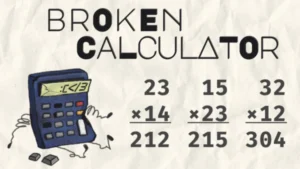
This calculator multiplies almost correctly. Students will find the one step it skips.
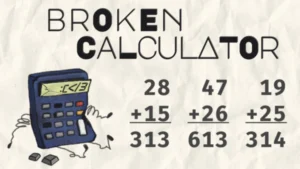
This calculator adds two-digit numbers wrong, the same way every time. Crack the rule, then predict its next mistake.
Who can get to 100 first in this simple, but delightful, math game?
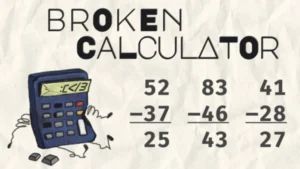
This calculator gets subtraction wrong the same way every time. Can your students crack its broken rule?
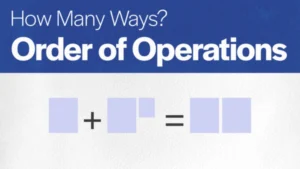
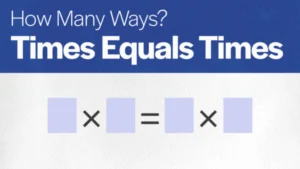
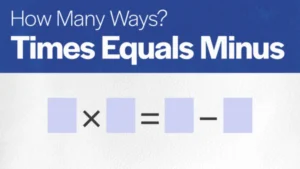
How many different ways can you make this math statement true using only the digits one through nine?
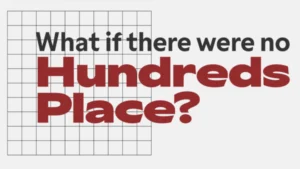
Imagine a world with no hundreds place. We’d have to call it ten tens instead. But then, what would we call the thousands place? How would we read 9999? What if we added one more?
In these math problems, the solution is already given. But another number is missing!
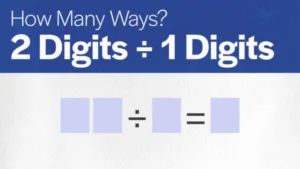
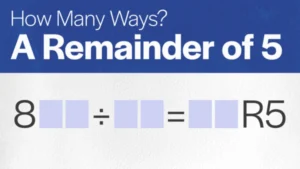
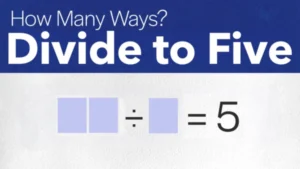
Fill in the blanks so the division leaves a remainder of exactly 5.
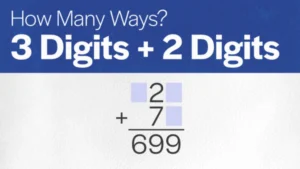
Typical practice problems don’t move students up Bloom’s Taxonomy. With this framework, you’ll see kids stop and really think about how to approach multi-digit addition.
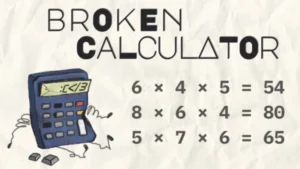
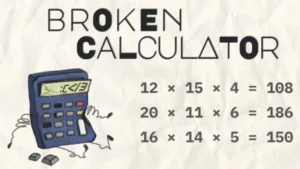
This calculator multiplies three numbers and gets them all wrong, in exactly the same way. Can your students figure out what it’s doing?
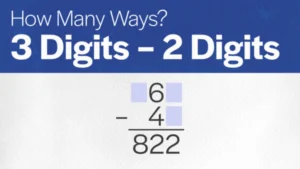
Typical practice problems don’t move students up Bloom’s Taxonomy. With this framework, you’ll see kids stop and really think about how to approach multi-digit subtraction.
This calculator multiplies two-digit numbers and gets every answer wrong, in exactly the same way. Can your students crack it?
Place value is something we cover in elementary school. It seems simple, but I’d wager that very few adults really understand the topic. I sure didn’t until I worked with non-base-10 number systems in college. Your students can get a taste of this mind-boggling experience by imagining what it would be like if we didn’t have the number 9. What would each digit represent then?
Your students will use estimation strategies to figure out how many parking spots are there in the parking structure at Disneyland? And you bet I reveal the real answer!
Ready for a tricky counting and divisibility game?
Fill in the blanks so the division equals exactly 5, using each digit only once. Then change the 5 to a 6 and watch most of the solutions disappear.
Sets of multiplication and division practice problems. But the unknown isn’t where you expect it to be!
A counting game where twos become “fizz” and threes become “buzz.” Easy to learn, surprisingly hard to survive.
What could we possibly do to make rounding more interesting for students who already get it? In this series, students consider how they might round to values other than “the nearest 10.” How, for example, do we round to the nearest 9? 7? 15?
When we’re adding and subtracting, do evens make odds into evens? Do odds make evens odd? Which one has… more power!?
Roll three dice and combine them using any mathematical operation. But be strategic to maximize your points!