“This website is my sub plans.” ~ a teacher describing Byrdseed
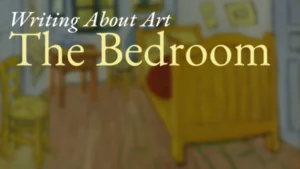
Van Gogh loved his little bedroom so much that he painted it three times. How many details will your students notice, and what poem will they write about it?
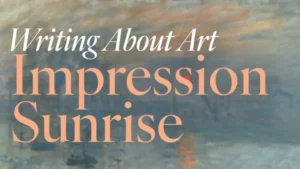
Look closely at Impression, Sunrise. What do you notice? Now turn those details into a poem you didn’t know you could write.
Your youngest students will learn to write Japanese Haiku poetry.
Let’s write a summary. A very short summary. With VERY strict rules.
Can your students come up with a one-syllable word to sum up their time away from school? And then rewrite The Beatles’ song Help!?
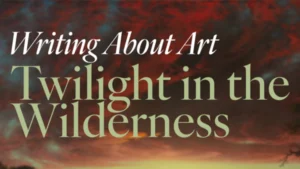
Look closely at Twilight in the Wilderness. What do you notice? Now turn those details into a poem you didn’t know you could write.
An old photograph. A holiday scene. Pick one object in the picture and write from its point of view.
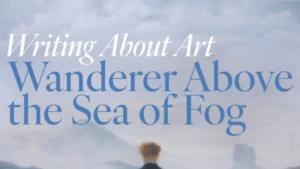
Look closely at Wanderer Above the Sea of Fog. What do you notice? Now turn those details into a poem you didn’t know you could write.
Let’s write from multiple perspectives using an old timey holiday photo!
What if we rewrote a piece of writing without using certain letters?
Let’s take a classic Christmas poem and remix it to work with another holiday!
Poetry and Prose meet at a party. What would they say to each other? How would they feel about each other’s style?
Look closely at Burning of the Houses of Lords and Commons. What do you notice? Now turn those details into a poem you didn’t know you could write.
A family arrives at a snowy New England farmhouse for Thanksgiving in this 1867 picture. How many details will your students notice, and what poem will they write about it?
Get your students writing some pretty darn impressive poetry based on Japan’s most famous artist.
Context clues lessons can be a disaster. Here, we expose students to a delightful classic packed with nonsense words (“Jabberwocky”) and ask them to decipher the meanings and parts of speech. Then, it’s only natural for students to write their own nonsense poems.
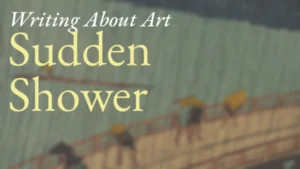
Rain pours down on a bridge, and everyone runs for cover. What would your students hear, smell and feel in Hiroshige’s famous storm? They’ll turn it into a poem built one line at a time.
Let’s write a holiday song about order and chaos!
Sure, Dr. Seuss wrote for young students, but can older students analyze his writing and learn to mimic his style? THEN, they can produce Seuss-style poetry about any topic: Ancient China, the electromagnetic spectrum, Pride and Prejudice, and (yes) fraction division!
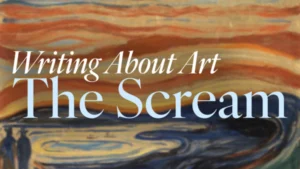
Your students will turn the iconic painting The Scream into a vivid, sensory poem.
Pi can go beyond circles! What if you wrote using the digits of pi as your guide?
Ready to push kids beyond the boring, old ABAB rhyme scheme and into something a bit more complex?
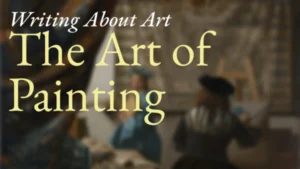
A curtain pulls back, and we’re suddenly inside a painter’s studio. Vermeer hid dozens of details in this room. How many will your students find, and what poem will they write about it?