“I use Byrdseed to differentiate for my clustered students. I LOVE all the ideas!” ~ a teacher in Washington
Pi is mysterious and strange! Why not let students discover it on their own?
Can we classify quadrilaterals like we classify living things?
Your special friends sure have some unique gift needs!
Two columns. One is an example, one isn’t. Can you figure out the hidden rule before the big reveal?
Why tell a kid the rules of a triangle when they can discover them!?
What odd and interesting shapes can your students find in this geometric image?
How many pounds of pasta could you cook using the water in an olympic-sized pool?
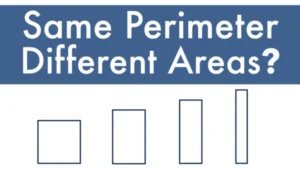
Can two rectangles have the same perimeter but… different areas!?
Let’s group letters by their symmetry, then create symmetrical words, and then symmetrical sentences!
You could keep zooming in on this snowflake forever!
Using patterns, students try to deduce where that area formula came from.
We’re looking at regular vs irregular polygons.
Which shapes go together based on parallel and perpendicular lines?
There can never be just one angle.
How many times could you fill up a jet plane using the fuel that would fit in an olympic-sized pool?
How has the volume of laptops changed over time? You know you want to check out how huge those first versions were!
Which are trapezoids and which are not?
Let’s find how the diameter and circumference of famous circles are related.
A lesson about lines, line segments, and rays that avoids dull memorization. Instead, we ponder this delightful question: Which is longer, a ray or a line? Then, kids consider what these different geometric concepts would think about each other.
How many 2 liter bottles could you fill up using the water in an olympic-sized pool?
What if this triangle pattern just kept repeating… forever!?