“Everything is so linear, but this makes me think diagonally!” ~ a student describing Byrdseed
You’ve got 60 spaces on a grid to create an amusement park, a house, a farm, or whatever you’d like. Divide it into seven pieces, order it by size, combine into two halves, and more in this fraction project.
One equation, digits one through nine, and a hunt for the smallest possible answer.
One equation. Digits one through nine. How many ways can you make it work?
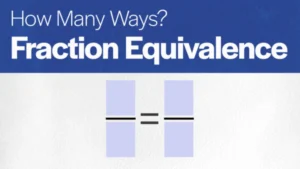
When fractions take on a new denominator, it’s as if they’re wearing a disguise – same value, new look. So let’s write a story about fraction equivalence starring a fraction who needs to fit in with a new group.
You only have six digits to form three fractions. Can you combine them to get to 0?
What does it look like to multiply fractions?
Have you ever wondered what it looks like to divide by a fraction, man?
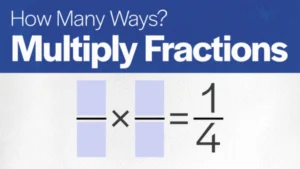
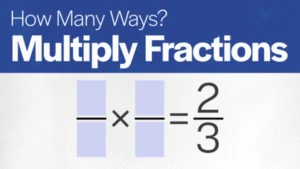
How many different ways can you make this fraction multiplication statement true using only the digits one through nine?
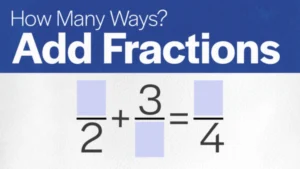
How many different ways can you make this fraction addition statement true using only the digits one through nine?
What if you set the stage for students to discover how to multiply fractions?
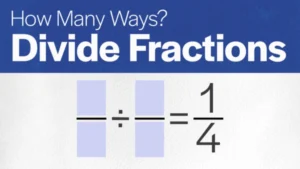
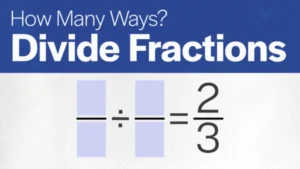
How many different ways can you make this fraction division math statement true using only the digits one through nine?
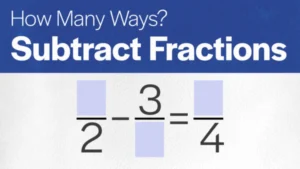
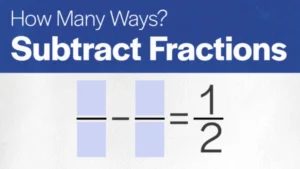
How many different ways can you make this fraction subtraction statement true using only the digits one through nine?
Can your students figure out how to add fractions by looking for a pattern?
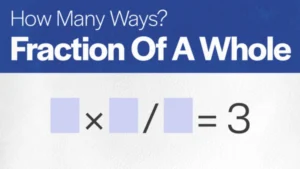
A whole number times a fraction has to equal exactly 3. Which digits work?
How many different ways can you make this math statement true using only the digits zero through nine?
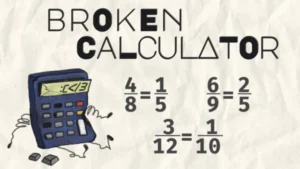
This calculator simplifies fractions with a rule that sometimes works. What is it doing wrong?
What if we took a fraction apart, then took those pieces apart, then recombined them, and then recombined those, arriving back to the original fraction?
How many different ways can you make this math statement true using only the digits one through nine?
Which set of fractions would be the trickiest to order from least to greatest? Let’s have a tournament!
What do you do with students who already get their fraction operations? Give them a contrived project about recipes or pizza slices? Make them solve annoyingly hard practice problems? Please. Here, we get students thinking in a whole new way, pondering which has more power, the numerator or denominator.