“Everything is so linear, but this makes me think diagonally!” ~ a student describing Byrdseed
Let’s group letters by their symmetry, then create symmetrical words, and then symmetrical sentences!
What if we make a huge spiral of numbers and then highlight only the primes? Well, a bunch of weird patterns show up!
Prime numbers are unpredictable! How can we possibly find them all? An Ancient Greek mathematician found one way!
Can you make each side of this triangle add up to 9 using the digits 1-6?
Skip the assigned topics. Let students research what they’re genuinely curious about — here’s how to structure it so it actually works.
What if we played Tic-Tac-Toe with numbers and instead of three-in-a-row, we add up to 15? Well… then we’d have Number Scrabble!
The Collatz Conjecture: start with any number and get to 1 using just two rules. It seems to always work…
Every positive integer can be written as the sum of (at most) four perfect squares!
Imagine a 3×3 square in which every row, column, and diagonal have the same sum. That’s a magic square!
Why tell a kid the rules of a triangle when they can discover them!?
It seems like there’s always a prime number between two perfect squares… but is this always the case!?
Can we classify quadrilaterals like we classify living things?
So… just how much caffeine can you have before you end up in the ER?
Pi is mysterious and strange! Why not let students discover it on their own?
So, can you write every odd (greater than 3) as the sum of three primes?
Would you save money if you lived in Las Vegas and commuted every day to San Francisco?
Using this one weird trick, it seems that you can turn any number into a palindrome!
What do people know about the amount of caffeine in common beverages?
Which are trapezoids and which are not?
In 1932, a leading authority on rattlesnakes, Laurence Klauber, discovered a startling pattern within a triangle of primes.
Why does the sum of the first 5 odds also equal 5 squared?
Pascal’s pattern-packed triangle is a potent puzzle for pupils to ponder.
What do you call two prime numbers who are very close together?
Can any even number be written as the sum of two primes? Goldbach thought so, but we haven’t proven it… yet!
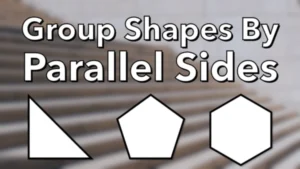
Which shapes go together based on parallel and perpendicular lines?
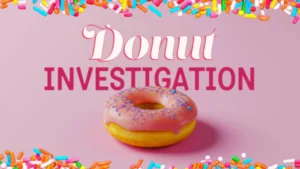
In this cross-curricular investigation, students will look into an intriguing question: do donuts or salads have more sugar? They’ll grapple with misleading information, bias, and use their math skills to create a visual representation of sugar in popular foods.
Can any perfect square be written as the sum of two primes?
Using patterns, students try to deduce where that area formula came from.
Caffeine is everywhere. But what are the ads really saying? Analyze the claims, then create your own public service announcement.
So should we make another movie in this series?
How can you cross each bridge in this city exactly once?